Understanding Brand Power and Why It Matters
Every successful company shares one thing in common: strong brand power. Whether you are a startup trying to carve out space in a competitive industry or an established enterprise defending market share, the power of the brand you build determines how customers perceive you, how much they trust you, and whether they choose you over a rival. In this comprehensive guide, we break down the brand power meaning, explain why building a brand is important, explore how branding power is built in through deliberate strategy, and share research-backed ways to measure and amplify it.
Brand power is not a vanity metric. It directly influences pricing leverage, customer retention, and resilience during economic downturns. Companies with high branding power spend less on acquisition because word-of-mouth and recognition do the heavy lifting. Conversely, businesses that neglect brand building often find themselves competing on price alone, a race to the bottom that erodes margins and long-term viability.
If you are a marketer, founder, or business strategist looking to understand the power of brand and how to harness it, this article covers everything you need. We have also included links to related resources on branding ideas, brand design, and brand storytelling so you can dive deeper into any area that interests you.
What Is Brand Power and What Does It Mean?
Brand power refers to the measurable influence a brand exerts over consumer behavior, market perception, and purchasing decisions. In simpler terms, the brand power meaning can be understood as the degree to which a brand commands recognition, trust, and preference within its target market. A brand with high power is not just widely known; it is actively chosen, recommended, and defended by its customers, even when cheaper or more convenient alternatives exist.
The concept encompasses several dimensions. First, there is cognitive influence: how quickly and accurately consumers recall the brand when thinking about a product category. Second, there is emotional influence: the feelings, associations, and identity signals the brand triggers. Third, there is behavioral influence: whether those perceptions translate into actual purchases, repeat business, and advocacy.
Consider how certain brands dominate their categories. Apple does not merely sell electronics; the brand represents creativity, simplicity, and status. Nike does not just sell sneakers; it embodies athletic aspiration. This kind of branding power is built in over years of strategic decisions spanning product quality, visual identity, marketing, and customer experience. The brand archetypes a company adopts and the consistency of its brand personality are central to this process.
It is also worth noting that brand power operates on a spectrum. Emerging brands may have localized recognition, while global juggernauts enjoy worldwide recall. What matters at every stage is that the brand’s influence is growing relative to competitors and deepening its hold on customer loyalty.
What Is the Difference Between Brand Power and Brand Equity?

Brand power and brand equity are closely related but distinct concepts that are often confused. Brand power focuses on the influence a brand exerts over consumer behavior and market perception. It answers the question: how strongly does this brand shape what people think, feel, and do? Brand equity, on the other hand, is the financial value that influence creates. It answers: how much is that influence worth in dollars?
Think of brand power as the cause and brand equity as the effect. A brand with high power generates strong equity, which translates into revenue premium over generic competitors, greater market share, and higher enterprise value. Companies that focus on building brand power through consistent quality, storytelling, and customer engagement inevitably grow their brand equity as a result.
Why Building a Brand Is Important: 7 Business-Critical Reasons
One of the most common questions marketers and entrepreneurs ask is: why is building a brand important? The answer extends far beyond aesthetics. A strong brand is a strategic asset that compounds in value over time. Here are seven reasons every company should invest in brand building.
1. Customer Trust and Credibility
Trust is the currency of commerce. Consumers overwhelmingly prefer brands they recognize and feel confident about. A well-defined brand with consistent messaging, professional logo design, and clear values signals reliability. This is especially critical in industries where switching costs are low and options are abundant.
2. Price Premium and Profit Margins
Brands with high power can charge more without losing customers. Research consistently shows that consumers are willing to pay a premium for products from brands they trust and admire. This premium is not about overcharging; it is about the perceived value, emotional reassurance, and quality guarantee the brand provides. Without branding power, companies are forced to compete on price, which compresses margins.
3. Customer Loyalty and Lifetime Value
Acquiring a new customer costs five to seven times more than retaining an existing one. Strong brand power drives repeat purchases and long-term relationships. Loyal customers also tend to buy more over time and are less sensitive to price changes. This is why branding strategies should always factor in retention alongside acquisition.
4. Competitive Differentiation
In crowded markets, products often look similar on paper. The brand becomes the differentiator. A strong brand positioning strategy helps consumers understand what makes your company unique, whether that is innovation, craftsmanship, sustainability, or customer service. Without differentiation, you are just another option in a sea of sameness.
5. Easier Market Expansion
Companies with established brand power find it significantly easier to launch new products, enter new markets, or extend into adjacent categories. Consumers transfer their trust from the parent brand to the new offering. This is why brand extensions succeed for companies like Google, Amazon, and Virgin, but fail for lesser-known players attempting the same strategy without the underlying brand equity.
6. Resilience During Crises
Economic recessions, supply chain disruptions, and public relations challenges affect every company. However, brands with deep customer loyalty weather these storms far better. Customers stick with brands they trust during uncertainty because the familiar feels safer. Companies without brand power see customer attrition spike the moment conditions get tough.
7. Talent Attraction and Retention
A strong brand is not just customer-facing. It influences the talent market as well. Top professionals want to work for brands they respect and admire. Companies with powerful brands attract better candidates, experience lower turnover, and benefit from employees who genuinely believe in the mission. This internal brand power creates a virtuous cycle where motivated teams deliver better products, which further strengthens the brand.
How Brand Power Is Built In: A Step-by-Step Framework
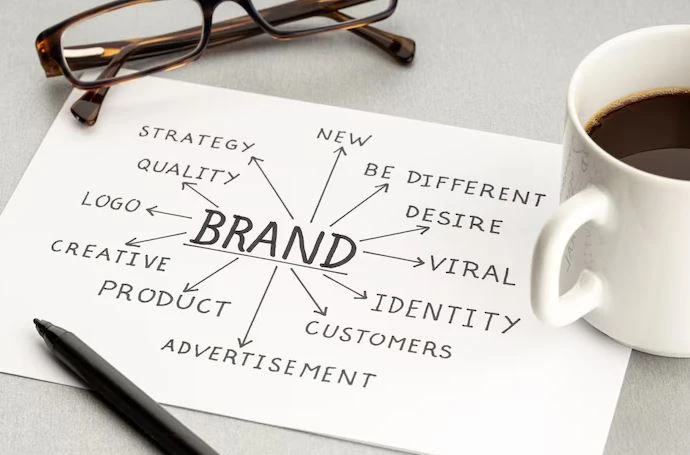
Branding power is not something you purchase or install overnight. It is built in through deliberate, sustained effort across every customer touchpoint. Below is a step-by-step framework for building brand power from the ground up.
Step 1: Define Your Brand Identity
Every strong brand starts with a clear identity: its purpose, values, personality, and visual language. Your brand purpose explains why your company exists beyond profit. Your values establish what you stand for. Your personality determines how you communicate, whether authoritative, friendly, provocative, or empathetic. And your visual identity, including your logo, color palette, typography, and brand style guide, creates the recognizable face of your brand.
A cohesive branding package ensures consistency across every channel. When your website, social media profiles, packaging, and advertisements all feel like they come from the same brand, recognition builds faster and trust deepens.
Step 2: Understand Your Target Audience
You cannot build brand power without knowing who you are building it for. This requires thorough market research into demographics, psychographics, and behavioral patterns. What motivates your customers? What problems do they need solved? What values do they care about? Where do they spend time online and offline?
Go beyond surface-level data. Conduct interviews, analyze social media conversations, study competitor reviews, and map the customer journey from awareness to purchase to advocacy. The brands with the greatest power are the ones that understand their audience so deeply that every message, product decision, and experience feels personally relevant.
Step 3: Craft a Compelling Brand Story
Humans are wired for stories, and the most powerful brands leverage this. Your brand story should articulate your origin, your mission, and the transformation you create for customers. It should be authentic, emotionally resonant, and consistently woven into your marketing. Great brand stories do not just sell products; they invite customers into a narrative they want to be part of.
Step 4: Build a Strong Digital Presence
In the digital era, your online presence is often the first interaction a potential customer has with your brand. A professional, well-designed website serves as your digital headquarters. Active, value-driven social media accounts build community and engagement. Content marketing, including blog posts, videos, and infographics, establishes authority and attracts organic traffic through search engines.
Search engine optimization (SEO) is a particularly important lever for branding power. When your brand consistently appears for relevant searches, it reinforces recognition and credibility in the minds of potential customers. Every search result is a branding opportunity.
Step 5: Deliver Consistent Quality
No amount of marketing can compensate for a poor product or service. Brand power is ultimately built on the foundation of delivering on your promises. Every customer interaction, from browsing your website to unboxing your product to contacting customer support, either strengthens or weakens your brand. Consistency is what transforms a good first impression into lasting trust.
Step 6: Engage and Listen to Your Community
Brands with real power are not broadcasting at their audience; they are in conversation with them. Respond to reviews, participate in relevant discussions, ask for feedback, and show customers that their opinions shape your decisions. Word-of-mouth marketing thrives when customers feel heard and valued. Community engagement also provides invaluable insights for product improvement and innovation.
The Role of Logo Design in Brand Power
One frequently searched topic is brand power logo, and for good reason. Your logo is the most visible element of your brand identity. It is the symbol customers see on your products, website, advertisements, and social media. A strong logo does not create brand power on its own, but it serves as the visual anchor that makes recognition instant and recall effortless.
Think about the most powerful brands in the world. Their logos are iconic because they are simple, distinctive, and consistently applied. Whether it is a swoosh, an apple, or golden arches, these symbols carry enormous meaning because of the brand power behind them. For companies at any stage, investing in professional logo design that reflects brand values and resonates with target audiences is a foundational step. Explore different approaches such as wordmark logos, abstract logos, emblem logos, or minimalist logos to find the style that best represents your brand’s personality.
Logo placement also matters. Consistent use across all touchpoints, from business cards and product packaging to signage and digital ads, reinforces recognition and builds the visual shorthand that underpins brand power.
Brand Power Research: What the Data Shows
For those interested in brand power research, the evidence overwhelmingly supports investing in brand building. Several studies and industry reports highlight the tangible business impact of strong brands.
According to findings from Kantar’s BrandZ research, the world’s most valuable brands consistently outperform the market in terms of shareholder returns. Strong brands recover faster from economic shocks and generate higher revenue growth over ten-year periods compared to weaker competitors. The data suggests that brand power is not a soft metric but a measurable financial asset.
Research from the Ehrenberg-Bass Institute, which has influenced major marketers globally, emphasizes that brand growth comes primarily from increasing mental and physical availability. Mental availability means being the brand that comes to mind first when a consumer thinks about a category. Physical availability means being easy to find and buy. Together, these two factors explain much of what drives the power of brand in competitive markets.
Other studies show that consistent brand elements, including colors, logos, and taglines, can increase brand recognition by up to 80 percent. This is why rebranding efforts must be handled carefully; changing too many visual cues at once risks breaking the recognition that took years to build.
The takeaway from brand power research is clear: companies that invest consistently in brand building see compounding returns in the form of pricing power, customer loyalty, reduced acquisition costs, and greater resilience. Those that treat branding as an optional expense rather than a strategic investment risk falling behind competitors who understand the long-term value of branding power.
How to Measure Brand Power: Key Metrics and Methods
Building brand power is only half the equation. You also need reliable methods to measure it so you can track progress, identify weaknesses, and optimize your strategy. Here are the most important metrics for assessing branding power.
Brand Awareness and Recognition
Awareness measures whether your target audience knows your brand exists. Recognition goes further: can they identify it from visual cues like your logo, colors, or tagline? These are typically measured through surveys (aided and unaided recall tests), search volume trends for branded keywords, and social listening tools that track brand mentions.
Brand Association and Perception
This metric captures what consumers think and feel about your brand. Are the associations positive or negative? Is your brand linked to quality, innovation, affordability, or something else? Brand perception is typically assessed through customer surveys, Net Promoter Score (NPS), sentiment analysis of social media and review platforms, and qualitative research like focus groups.
Brand Loyalty and Retention
Loyalty metrics include repeat purchase rate, customer lifetime value (CLV), churn rate, and the proportion of revenue from returning customers. A high loyalty score indicates strong brand power because it shows that customers are choosing you despite available alternatives. Tracking loyalty over time reveals whether your brand-building efforts are translating into durable competitive advantage.
Brand Equity
Brand equity is the overall commercial value derived from consumer perception. It is measured through a combination of the metrics above plus financial indicators like revenue premium over generic competitors, market share, and the brand’s contribution to enterprise value. Frameworks like Keller’s Brand Equity Model and the BrandZ methodology provide structured approaches to quantifying equity.
Share of Voice and Share of Search
Share of voice measures how much of the conversation in your industry your brand owns compared to competitors, across advertising, PR, and social media. Share of search, a newer but powerful metric, measures your brand’s proportion of organic search volume within its category. Research by Les Binet has shown that share of search is a strong leading indicator of future market share.
Transform Your Business with Professional Logo and Branding Services
Revamp My Brand
Real-World Examples of Brand Power in Action
Examining how established brands have built and maintained their power provides actionable lessons for companies at every stage.
Apple demonstrates how product design, ecosystem lock-in, and aspirational marketing combine to create one of the most powerful brands in history. Every product launch becomes a cultural event because the brand has earned that level of attention over decades of consistent innovation and quality.
Patagonia has built enormous brand power through a clear commitment to environmental sustainability. The brand’s willingness to tell customers not to buy products they do not need, famously demonstrated through its anti-consumerism campaigns, paradoxically strengthened customer loyalty and brand admiration. Purpose-driven branding, when authentic, is one of the most durable forms of branding power.
On a smaller scale, many direct-to-consumer brands have built impressive power through social media engagement, transparent business practices, and community-driven storytelling. Brands like Glossier and Allbirds grew rapidly by deeply understanding their audiences and building products around those insights, proving that the power of brand is accessible to companies of any size.
Common Mistakes That Weaken Brand Power
Understanding what to avoid is just as important as knowing what to do. Here are the most frequent mistakes companies make when it comes to brand building.
Inconsistency across channels is a major brand killer. When your website, social media, packaging, and advertising send mixed messages or use different visual styles, it fractures recognition and erodes trust. A documented brand style guide helps prevent this.
Chasing trends at the expense of identity is another common trap. While brands should evolve, pivoting your messaging or visual identity every time a new trend emerges makes you look unfocused rather than relevant. The strongest brands adapt trends to fit their identity rather than abandoning their identity to chase trends.
Neglecting existing customers in favor of acquisition is also damaging. Your current customers are the foundation of your brand power. Ignoring their feedback, underinvesting in customer experience, or failing to reward loyalty weakens the very relationships that sustain your brand.
Finally, underinvesting in visual identity is more harmful than many companies realize. A poorly designed logo, outdated website, or amateurish packaging signals that the brand does not take itself seriously, and consumers pick up on those signals immediately.
Frequently Asked Questions
| What is brand power? Brand power refers to a brand’s ability to influence consumer decisions, and maintain a strong market presence. It is driven by factors like brand recognition, reputation, emotional connection, and perceived value. |
| Why companies should focus on building strong brand power? Companies should focus on building strong brand power to drive customer loyalty, and create long-term business growth. A powerful brand enhances trust, differentiates from competitors, and attracts new customers with less marketing effort. |
| What is brand loyalty? Brand loyalty is a customer’s consistent preference for a specific brand over competitors due to trust, and positive experiences. It leads to repeat purchases, advocacy, and long-term business growth. |
Final Thoughts
Brand power is one of the most valuable assets any company can develop. It is not built overnight, nor can it be bought. It is the result of consistent quality, authentic storytelling, deep audience understanding, and disciplined execution across every touchpoint. Whether you are a startup establishing your first branding package or an established company looking to strengthen your market position, investing in branding power delivers compounding returns that touch every part of your business.
The power of brand is ultimately the power of trust. Build it carefully, protect it fiercely, and never stop earning it. For more insights on building a strong visual identity, explore our guides on brand design, personal branding examples, and sustainable branding.

Logopoppin
Logopoppin is a graphic design agency that specializes in logo designing, web development, video production and advanced branding services. We love to innovate businesses with new age technologies, allowing them to improve their visual reputation.